
It was a night meant for rest and reflection, but for Braun Levi, May 4, 2025, became a night of tragedy.
The 18-year-old tennis star, a three-time captain at Loyola High School, had survived the Palisades Fire earlier in the year, only to have his promising life cut short in Manhattan Beach.
Walking along the streets with a friend around 1 a.m., Braun was struck by an Infiniti FX35, driven by 33-year-old Jenia Resha Belt, ending his life in an instant.

Authorities later confirmed that Belt’s blood alcohol level was more than double the legal limit at the time of the collision.
This revelation added an extra layer of outrage and sorrow to a family already grappling with unimaginable loss.
Seven months after the crash, law enforcement finally arrested Belt, charging her with murder in connection with Braun Levi’s death.

The delay in arrest left the community in suspense, as questions about justice, accountability, and public safety loomed large.
Braun’s family has since filed a $200 million wrongful death lawsuit, seeking justice and highlighting the dangers of repeat DUI offenders.
Their legal action underscores the tragic consequences of negligent driving and the need for stricter enforcement.
Friends and teammates remember Braun not just for his skill on the tennis court, but for his leadership, character, and bright spirit.
He had been on track to play tennis at the University of Virginia, a dream that would never come to fruition.
His accomplishments, including multiple championships and team accolades, reflected years of dedication and hard work.

The impact of his death rippled far beyond his immediate family, reaching classmates, teachers, and local residents.
Social media quickly filled with tributes, sharing photos of Braun with his racket, on the court, and smiling with friends.
Messages of grief and remembrance highlighted how much the young man had touched the lives of those around him.
His coach described him as a disciplined athlete, a caring teammate, and someone who inspired younger players to aim high.
The heartbreak was compounded by the knowledge that his life was stolen by a preventable act of reckless driving.
Neighbors and bystanders who witnessed the crash recounted the horrifying scene, recalling the sound of impact and the chaos that followed.

Paramedics arrived swiftly, but Braun’s injuries were too severe to survive.
Police investigations revealed that Belt had a history of DUI offenses, raising serious questions about her repeated access to vehicles while impaired.
Community members expressed anger and frustration that such a dangerous driver remained on the road.
Local officials emphasized the importance of stricter DUI enforcement and the devastating consequences of ignoring repeat offenders.
The arrest of Belt brings some measure of accountability, though it cannot erase the loss felt by Braun’s family.
His parents, still reeling from the shock, have spoken publicly about the pain of losing a child who had so much promise.

They describe moments they had hoped to share: college visits, victories on the court, and the simple joys of young adulthood.
Instead, they are left with grief, unanswered questions, and a fight for justice.
The murder charge against Belt carries severe legal consequences, reflecting both the deliberate negligence and the repeated history of DUI violations.

Prosecutors emphasize that justice in cases like this is essential not only for the family but for community safety.
The trial will examine the circumstances of the crash, Belt’s prior record, and the choices that led to Braun’s death.
Legal analysts note that repeat DUI offenders face increased penalties when their actions result in death, including potential life sentences.

Braun’s story has sparked conversations about public safety, accountability, and the devastating ripple effects of impaired driving.
Local schools and sports organizations have used his memory to educate young drivers about the importance of responsible choices.
Community vigils have been held in his honor, with tennis courts, gymnasiums, and local parks serving as gathering points.
Friends carry his memory forward, dedicating matches, tournaments, and practices to the young athlete.
Social media campaigns have amplified his story, encouraging drivers to remain sober and vigilant.
The case also highlights systemic concerns, including how repeat offenders are monitored and the steps needed to prevent similar tragedies.

Parents, educators, and community leaders are calling for policy changes, stricter laws, and increased awareness campaigns.
While legal proceedings move forward, the emotional toll remains immense.
Braun’s younger siblings, friends, and teammates are left to navigate a world without his presence.
Counselors and mental health professionals emphasize the importance of support networks in helping those affected process their trauma.
Even those who never met Braun feel the weight of his story, reflecting on how quickly life can be taken by reckless actions.
The crash serves as a stark reminder that impaired driving can destroy futures in a matter of seconds.

Each year, thousands of lives are affected by DUI-related incidents, and Braun’s death underscores the human cost behind the statistics.
The family’s wrongful death lawsuit is expected to bring further scrutiny to Belt’s past behavior and the systems that allowed her continued access to vehicles.
Legal experts believe the case could influence broader DUI legislation, highlighting the need for more aggressive measures against repeat offenders.
The story has resonated nationwide, capturing attention from sports communities, legal analysts, and advocacy groups.
Many have expressed hope that justice will set a precedent and prevent future tragedies.
For now, Braun Levi’s family continues to mourn, leaning on friends, faith, and the community for support.

They emphasize remembering his life, accomplishments, and the joy he brought to those around him.
His memory lives in the tennis courts where he trained, the photographs shared online, and the hearts of those who loved him.
Community members continue to advocate for stricter DUI enforcement, hoping that no other family experiences similar heartbreak.
His death has become a cautionary tale, a reminder that impaired driving can have irreversible consequences.
The legal system’s next steps will be closely watched, with prosecutors, defense attorneys, and families awaiting resolution.
Each piece of evidence, witness statement, and courtroom argument will contribute to the broader story of accountability.

Despite the tragedy, Braun’s legacy endures through scholarships, memorials, and ongoing remembrance events.
Friends recall his laughter, dedication, and the inspiration he provided to teammates and classmates.
His story encourages dialogue on prevention, education, and community involvement in safety.
Social media hashtags and awareness campaigns honor his name while promoting responsible driving habits.
The court proceedings are a reminder that justice, though delayed, seeks to address not just one crime but the ripple effects it causes.
The community continues to support the Levi family, organizing fundraisers, vigils, and awareness events.
Every match played in his memory, every candle lit, and every story shared helps ensure Braun is not forgotten.
His parents urge others to honor his life by making responsible choices behind the wheel.
Braun Levi’s death, though tragic, has sparked a movement toward awareness, prevention, and remembrance.
Communities are reminded that one life lost can motivate thousands to act, prevent, and educate.
The legal case against Belt will unfold over months, but the memory of Braun will endure far longer.

His story stands as a testament to talent, promise, and the profound impact of a young life cut tragically short.
As prosecutors prepare their case, the community continues to grieve, reflect, and demand justice.
Braun’s friends, teammates, and loved ones remain united, honoring his life with every step forward.

From the courts to the tennis courts, his name resonates as a symbol of both loss and hope.
Ultimately, Braun Levi’s story is a reminder that life is fragile, choices matter, and accountability is essential.
His legacy inspires awareness, compassion, and a commitment to safer communities.
A Cup of Coffee After Battle: The Story of Pfc. Faris “Bob” M. Tuohy and His Brothers in Arms
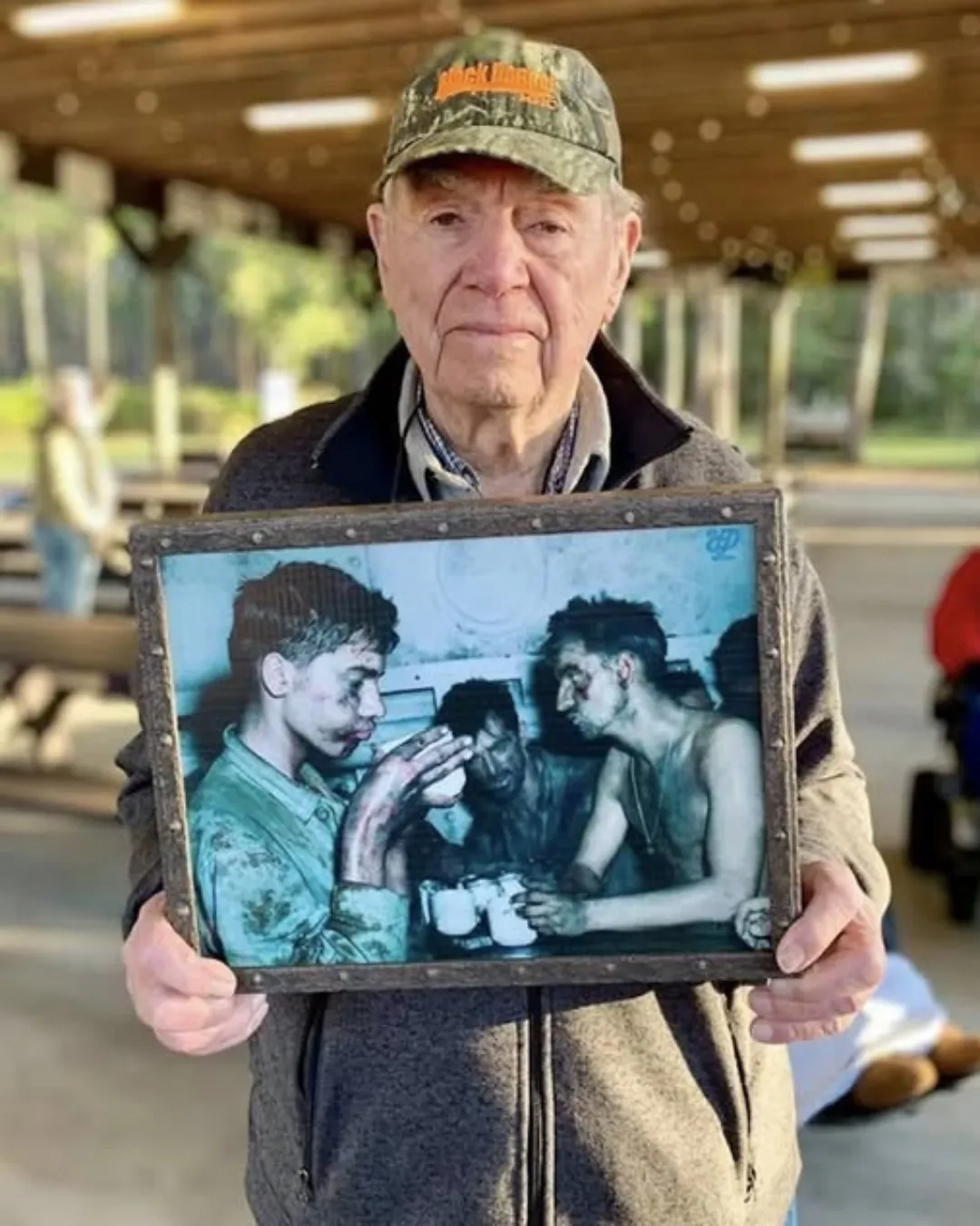
On February 19, 1944, aboard the USS Arthur Middleton (APA-25), three young Marines paused for a moment of calm after surviving the brutal fight for Engebi Island in the Enewetak Atoll. Among them was Private First Class Faris “Bob” M. Tuohy of Ohio, clutching a tin mug of coffee. The image, preserved in a wartime photograph, is deceptively simple—a few Marines taking a break after days of chaos. Yet within it lies the larger story of youth, sacrifice, and the uncertain hand of fate that defined World War II.
Bob Tuohy, born in 1924, was a Marine in the 3rd Battalion, 22nd Marine Regiment, part of the 4th Marine Division. His unit had been tasked with seizing Engebi, a key Japanese-held island in the Enewetak Atoll. The assault was fierce and swift, lasting two days



Leave a Reply