In the spring of 1942, as the world burned in the flames of World War II, Mexico watched cautiously from afar. President Manuel Ávila Camacho maintained a policy of neutrality that seemed prudent for a nation that had barely begun to heal its own revolutionary wounds. Echoes of the fighting in Europe and the Pacific reached our shores like distant rumors, like tales from another reality, but fate had other plans for our country.
On May 13, the waters of the Gulf of Mexico ran red with blood when a German submarine torpedoed the Mexican oil tanker Potrero del Llano. The sailors, caught off guard by the attack in the night, barely had time to react. The sea swallowed the lives of 14 Mexicans, whose only crime had been transporting oil to the United States. Days later, on May 20, the Faja de Oro suffered the same fate. Eight more sailors were added to the list of victims.
Mexican blood had been spilled, and the entire country cried out for justice. Indignation swept across the nation like a shockwave. In the streets of the capital, in the coastal towns, in every corner of the Republic, Mexicans demanded answers. On May 22, the German government received an ultimatum: immediate explanations and reparations, or there would be consequences. The response was silence. And silence in times of war is tantamount to defiance. On May 28, under a cloudy sky that seemed to foreshadow the dark times to come, the Mexican Congress approved the declaration of war against the Axis powers: Germany, Italy, and Japan.
In his address to the nation, President Ávila Camacho uttered words that would resonate for decades. “The state of war is war. Yes, war with all its consequences.” The war that Mexico would have preferred to forever banish from the methods of civilized coexistence, but which, in cases such as the present and current world disorder, constitutes the only means of affirming our independence and preserving the dignity of the Republic intact. For the second time in less than a century, our nation entered a global conflict.
But this time the battle would not be fought solely on our territory. Mexico’s participation in the war would take three distinct forms, each with its own history of sacrifice and valor. First, the massive shipment of raw materials and natural resources to support the Allied war effort. Mexican oil, recently nationalized, flowed to American factories like blood in the veins of the Allied war machine. Minerals, timber, food. Mexican soil surrendered its riches to the cause.
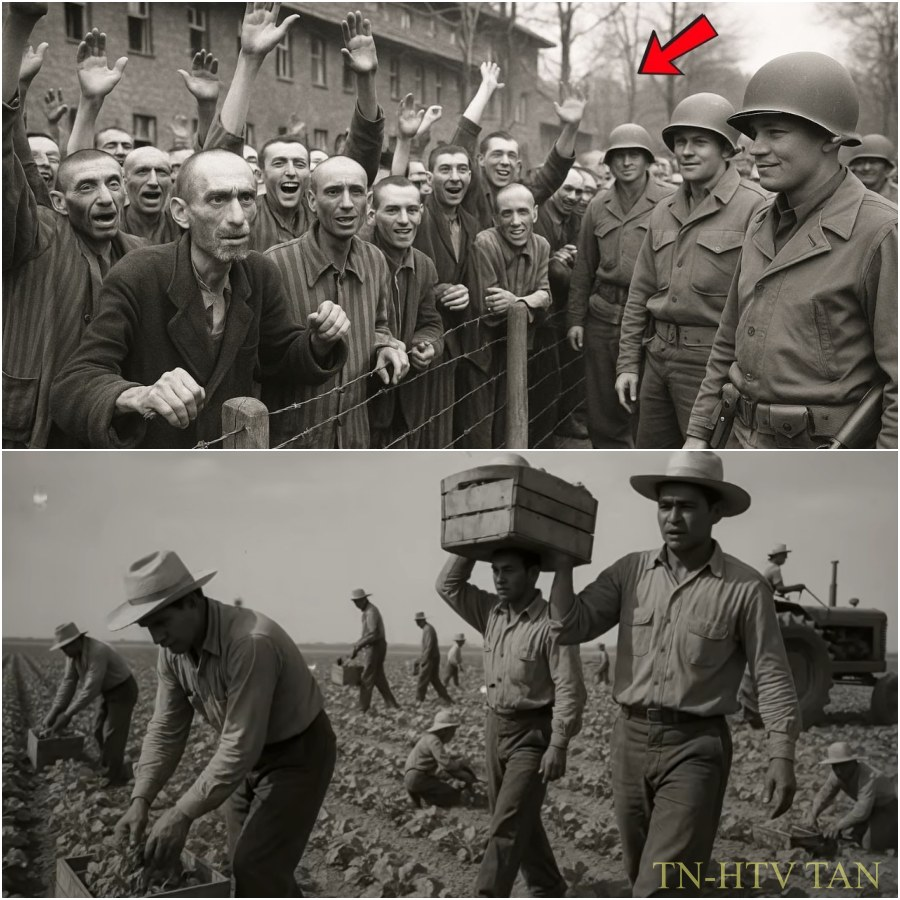
Second, the Bracero Program, a labor agreement signed on August 4, 1942, between Mexico and the United States, which allowed hundreds of thousands of Mexican workers to cross the border to cultivate the fields abandoned by American soldiers marching to Europe and Asia. These men, with their calloused hands and unyielding spirit, were soldiers without uniforms in an economic war. Their remittances helped support entire families in Mexico while their bodies bent under the Californian sun.
They were promised humane treatment, adequate housing, sufficient food, and a fair wage of 30 cents an hour. Reality, as is often the case, was far from what was promised on paper. And third, the creation of Squadron 2011 of the Mexican Expeditionary Air Force. The Aztec Eagles, as they would soon be known, would represent Mexico’s direct military participation in the conflict. After months of rigorous training at U.S. bases, these 300 brave men were sent to the Philippines to fight the Japanese forces occupying the archipelago.
Between June and August 1945, they completed 96 combat missions, 785 offensive sorties, and six defensive sorties. They accumulated 2,842 flight hours, 1,966 of which were in combat. Their P-47 Thunderbolts, with the Mexican insignia painted on their fuselages, sowed panic among Japanese troops during the operations in Luzon and Formosa. Five Mexican pilots were left buried in foreign soil: one shot down in combat, another killed in a crash during a mission, and three lost when their planes ran out of fuel over the vast Pacific Ocean.
But there is a fourth story, much less known, that remained buried in the archives for decades. It is the story of those Mexicans who, by chance, ended up prisoners of the Nazi regime and lived to tell of an extraordinary experience that challenges our understanding of war and human courage. France, 1943. Nazi-occupied Europe is a deadly labyrinth for any foreigner. The Gestapo, the fearsome German secret police, maintains an iron grip on the conquered territories. Raids are frequent, arrests arbitrary, and the


Leave a Reply