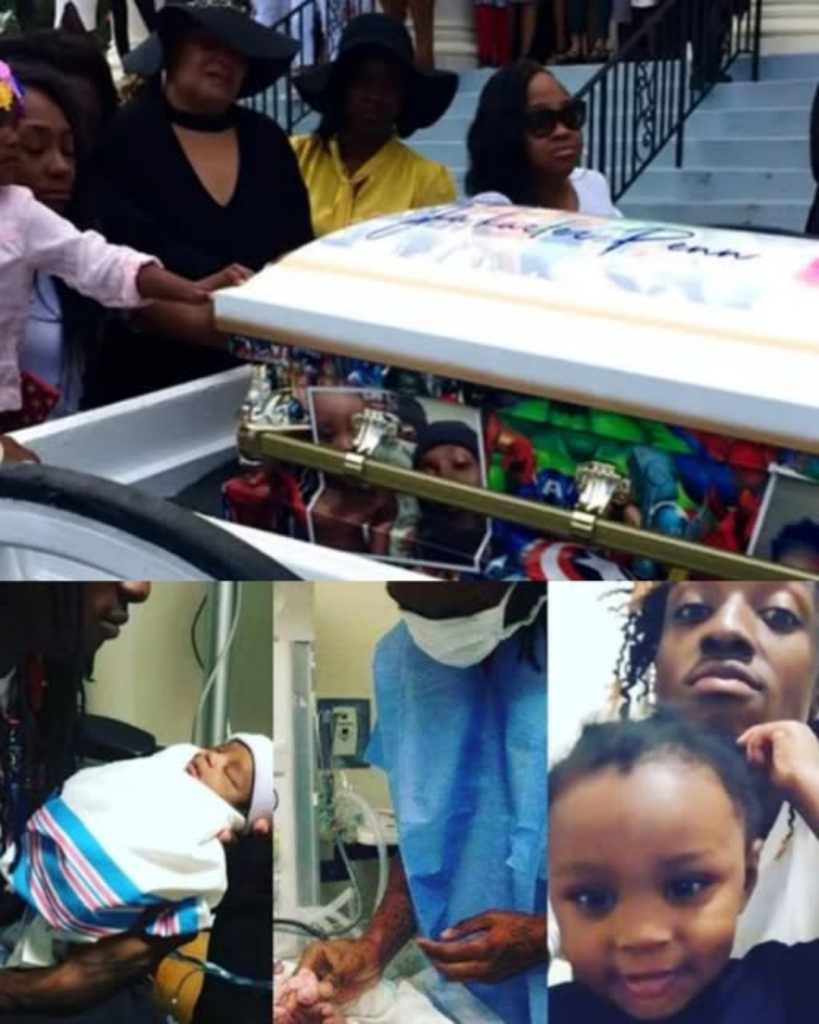
Atlanta has always been a city of rhythm and pride — a place where jazz meets hip-hop, where civil rights heroes once marched, and where southern warmth merges with the ambition of a modern metropolis. Yet beneath every city’s heartbeat, shadows linger, places where darkness can take root unnoticed.
In October 2017, that darkness erupted in a small apartment on Howell Place. What unfolded there was so twisted, so incomprehensible, that even seasoned detectives struggled to put the pieces together. This was no robbery, no gang violence, no domestic quarrel gone awry. It was a horror born from the very hands meant to protect, shattering the sacred trust of motherhood itself.
This is the story of Lamora Williams — a mother from Atlanta who took the lives of her two young sons, placed their bodies in an oven, and attempted to mask the atrocity as something beyond her control.
A Young Mother’s Struggle
https://www.youtube.com/embed/uuSMSP111HI?embeds_referring_euri=https
Lamora Williams had always been described as “different.” Family members later spoke of her childhood struggles — emotional turbulence, long periods of isolation, and sudden outbursts. Some relatives claimed she had received diagnoses related to mental health, though no formal documentation could confirm the details.
By her early twenties, Lamora was a single mother of three young children. Her partner had left, and financial stress, loneliness, and the unrelenting pressure of parenting weighed heavily on her. Friends recalled a woman torn between love and desperation.
“She loved her kids,” one acquaintance said. “But you could tell she was overwhelmed. She would say things like, ‘I can’t do this anymore.’”
No one could have predicted the horrific choice she would eventually make.
The Night of October 13, 2017
It began as any Friday night in Atlanta might — traffic humming softly on nearby streets, porch lights glowing, laughter drifting faintly on the air. Inside Lamora’s small apartment, a different rhythm pulsed, one no one outside could hear.
Her two youngest sons, one-year-old Ja’Karter and two-year-old Ke’Yaunte, were restless. Neighbors would later describe strange, unsettling noises — not screams, but something heavier, unnatural. Something that did not belong in the soft cadence of ordinary life.
In a moment of rage, despair, or madness, Lamora killed them. How exactly she did so is still debated. What investigators confirmed, however, is undeniable: she placed the lifeless bodies in the oven and turned it on.
The smell that permeated the apartment was indescribable — a fusion of burnt flesh and something far darker than smoke.
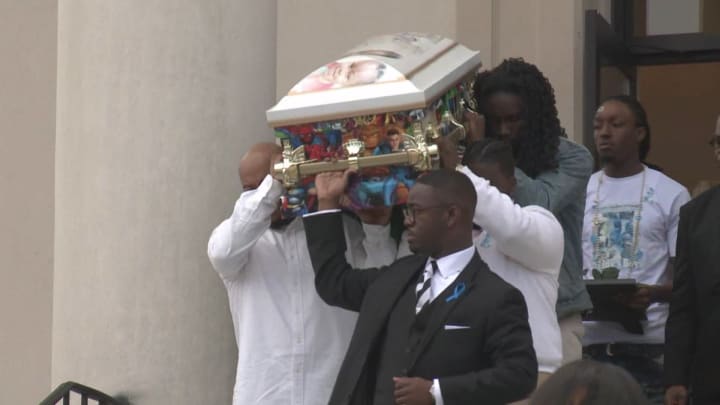
The Father’s Horror
The following morning, Lamora made a call that would haunt the father,
Jameel Penn, forever. Over a video call, he saw a sight no parent should ever witness. His two young sons lay lifeless on the apartment floor.
“Why did you do this?” he screamed, his voice choked with disbelief and terror.
Lamora’s expression, he later recalled, was disturbingly calm — detached, almost rehearsed, as if the horror she created had no weight on her conscience.
Jameel dialed 911 immediately. When officers arrived at the apartment, they were met with a scene that would leave lasting scars on even the most experienced law enforcement personnel. The two boys’ bodies were inside the oven, their skin blistered, clothing melted. The scent of burned flesh hung thickly in the air. One officer reportedly vomited outside; another quietly wept.
The Scene of Horror
Inside, chaos reigned. Toys were scattered across the floor, trash and food containers lay discarded, and blood stained the apartment. It was more than a crime scene; it was a portrait of collapse.
One detective described it as:
“A home consumed by madness.”
The medical examiner’s report painted a grim reality. The boys had sustained injuries consistent with extreme heat exposure. Whether they had died before being placed in the oven or during, the conclusion was devastatingly clear: Lamora had attempted to destroy their bodies through fire.
Her eldest child, a three-year-old boy, was unharmed, having been placed with a relative before the killings.
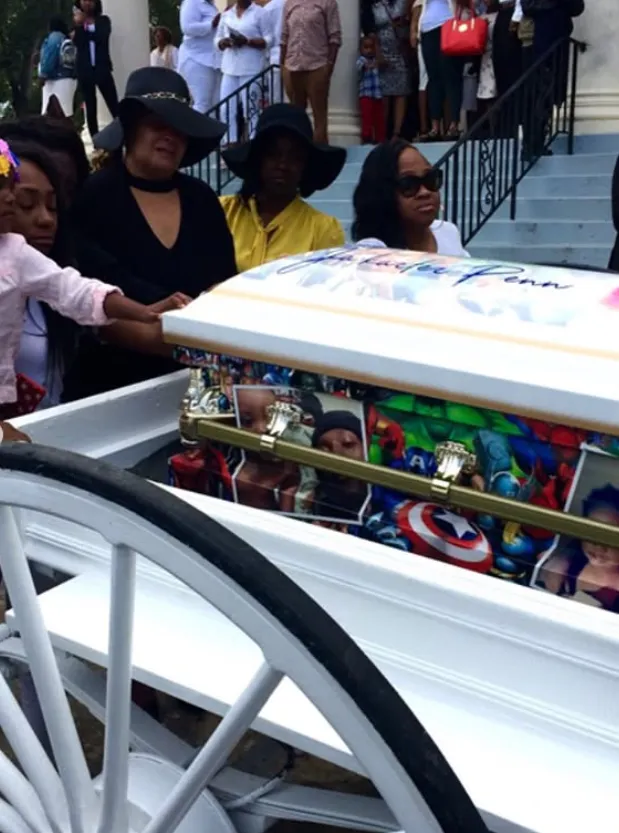
When police arrested Lamora, she did not flee. She seemed detached, almost numb. At first, she claimed she had left her children alone for a few hours and returned to find them dead, insisting she had no idea what had happened.
But the evidence told a different story. Witness timelines, forensic details, and her own inconsistent statements suggested something far darker. She oscillated between emotional breakdowns — sobbing and begging for forgiveness — and cold, emotionless denials of guilt.
Psychiatrists were called in to evaluate her mental state. Some suggested postpartum depression or psychosis; others concluded the act was deliberate, rooted in resentment or rage. Even her family was divided. Her mother publicly stated, “Lamora was not right in the head. She needed help a long time ago.”
Neighbors, however, voiced no sympathy. “Help or not,” one said, “you don’t do that to your babies. You just don’t.”
The Trial and the Questions That Remain
Court proceedings were harrowing. Each piece of evidence made the night of October 13 clearer — and darker. Prosecutors argued Lamora acted intentionally, viewing her children as burdens, citing erratic behavior, social media posts, and lack of remorse.
Defense attorneys leaned on mental instability, portraying her as a broken woman who slipped through the cracks, someone in need of psychiatric care, not imprisonment.
The jury struggled with the dual realities: a mother’s frailty versus the brutal, undeniable deaths of two innocent boys. Ultimately, Lamora Williams was charged with multiple counts of murder, cruelty to children, and concealing a death. She remains in custody, her future sealed behind prison walls.
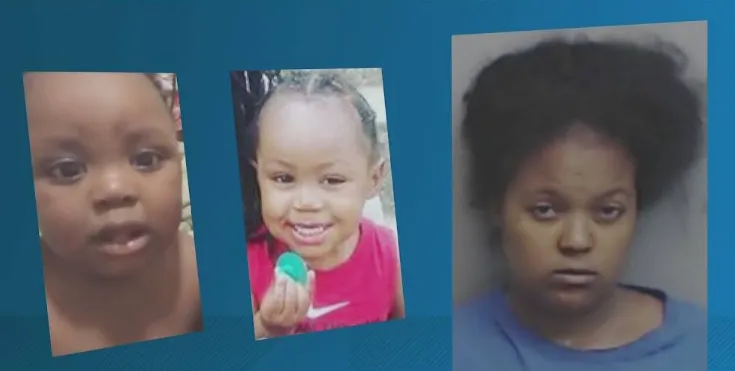
The Aftermath
The community of Atlanta reacted in collective grief. Memorials sprung up outside the Howell Place apartment — teddy bears, flowers, candles, handwritten notes: “Rest, little angels” and “You deserved better.”
Strangers wept for children they had never met. Television cameras showed police cars lined along the street. Parents across the city held their own children closer, shaken to the core by the brutality that had occurred within their city limits.
Mental health advocates called for increased support for struggling mothers. “This didn’t have to happen,” one counselor said. “If intervention had come sooner, if she had been properly treated, those boys might still be alive.”
Others disagreed, labeling the act as pure malice. During a community vigil, one pastor stated, “This was choice. Evil disguised itself as a mother that night.”
The Father’s Unending Grief
For Jameel Penn, the tragedy became an unrelenting shadow. In interviews, his voice trembled recounting that video call.
“I just dropped,” he said. “I fell to my knees. I couldn’t breathe. I couldn’t understand what I was seeing.”
Despite his anguish, he remained a pillar for his surviving son. Friends report that he still talks to his lost sons in nightly prayers: “I tell them Daddy loves you. I tell them I’m sorry I wasn’t there.”
At home, he created a small memorial: framed photos, two candles, and a note reading, “Forever my babies.”

A City Haunted
Years later, Atlanta still remembers. The Howell Place apartment has been repainted and rented out again, but the memory lingers. Neighbors say that every Halloween, two small teddy bears — one blue, one white — appear on the steps. No one knows who leaves them, but everyone understands why.
The tragedy changed local practices. Social services strengthened response to mental health crises involving mothers and children. Intervention programs and staff training were enhanced to spot early warning signs.
Yet no reform, no training, can undo what happened that night.
The Unanswered Question
What drives a mother to kill?
Madness? Desperation? Evil? Some unfathomable combination? Psychologists debate Lamora’s state, but even experts admit that parts of that night will remain a mystery.
Perhaps the scariest reality is not what she did, but that no one saw it coming soon enough. Friends noticed her exhaustion. Family noticed instability. But the system that could have prevented the tragedy — failed.
Two little boys paid the ultimate price.
https://youtube.com/watch?v=d9Ymyh_1UGc%3Fembeds_referring_euri%3Dhttps
The Silence After the Fire
Today, the apartment stands silent. Walls repainted, floors replaced, the oven removed. Yet, for those who remember, the air still carries the echo of two small voices silenced too soon.
In a city celebrated for its music, its soul, its celebration of life, this story remains one of the darkest notes ever played. Because sometimes, the monsters we fear most aren’t strangers lurking in the night. Sometimes, they live inside the very people meant to love us.
Lamora Williams’ crime left a mark not only on Atlanta but on the collective conscience — a grim reminder of the fragility of life, the weight of mental health, and the irreplaceable loss of innocence.
The Notebook That Saved Emma
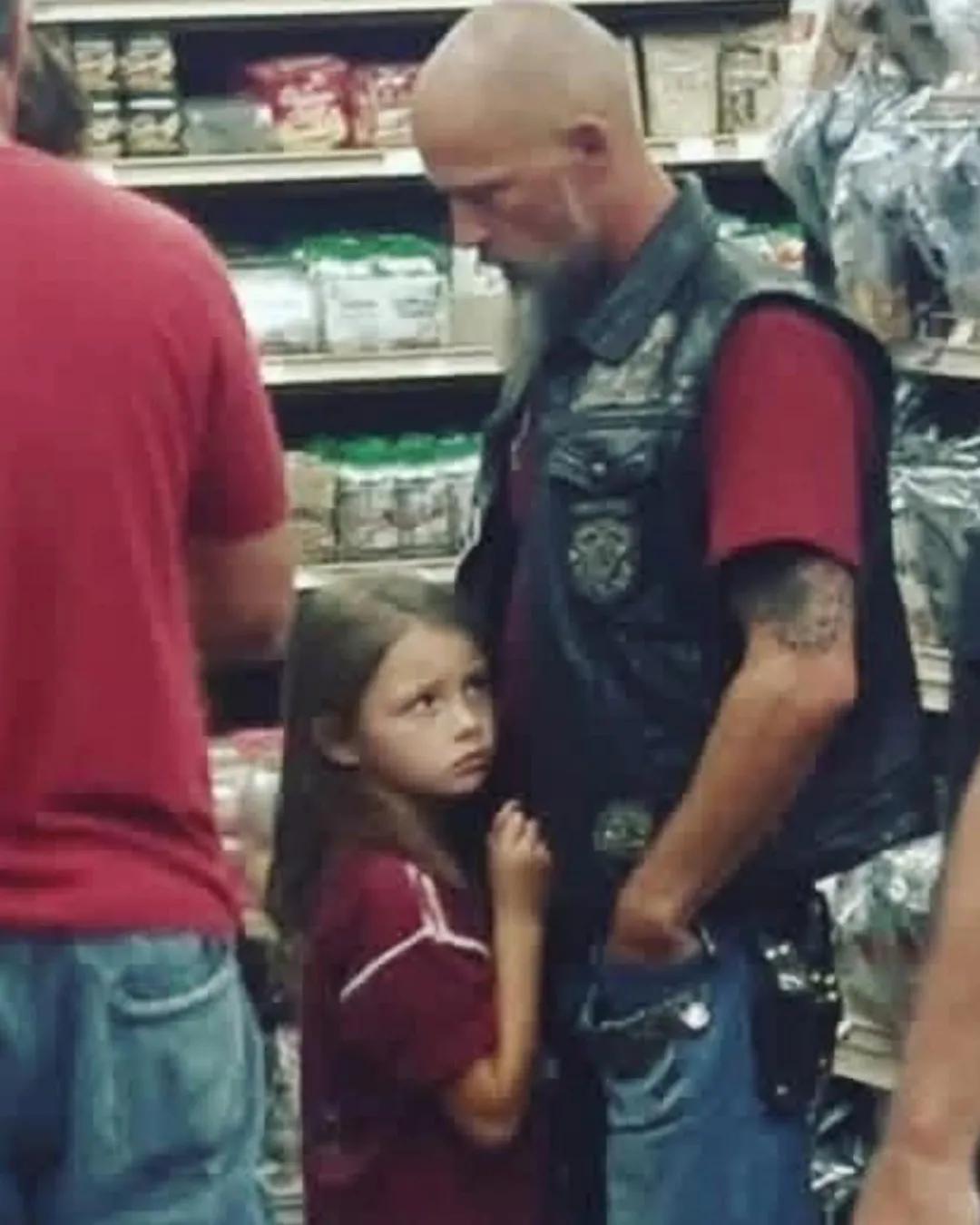
Sometimes, the ugliest truths hide in plain sight—beneath neat houses, forced smiles, and whispered lies. And sometimes, it takes someone society dismisses as “dangerous” to hear the cry for help everyone else ignores.
I noticed her as soon as I walked into the store. Not because she was following me, but because of the bruises on her small arms, the ones her mother kept yanking her sleeves down to hide. She didn’t say a word, just clung to the thick leather of my jacket like it was a lifeline. Her wide brown eyes followed my every move. Her mother hissed threats under her breath if she didn’t let go.
Other shoppers saw only what they wanted: a tattooed biker being “stalked” by a special-needs child. Whispers cut the air. “Disgusting.” “Somebody should call the cops.” Phones came out, cameras recording, strangers ready to brand me the villain.
Then she slipped something into my pocket. A pink notebook, plastered with unicorn stickers. Inside, scrawled in shaky crayon, were four words that made my blood run cold: “He hurts us. Help.”
The drawings told the rest. Stick figures. A big man with a belt. A girl and a woman crying. And at the bottom: “Not Mommy. Mom’s boyfriend. Please.”
Suddenly everything made sense. The mother’s yelling wasn’t anger—it was fear, a performance to protect her daughter from a monster waiting at home.
The little girl clung tighter. She wasn’t following me because of my motorcycle. She was following me because she was out of options. In a world full of “respectable” people who ignored her bruises, maybe my scarred face and leather vest looked like the only shield strong enough to stand against real violence.

Her name was Emma. I knelt down, ignoring her mother’s shriek, and told her softly, “Emma’s a pretty name. I’m Bear.” She didn’t speak—until the moment that changed everything. She broke free, ran behind me, and whispered, “Please, can you follow us home? He’s waiting.”
Six words. A plea too heavy for a child to carry.
I turned slightly, shielding my phone. Dialed one number. “Prez, it’s Bear. Code Nightingale. Grand Union on 5th. Blue sedan, mom and a little girl. Danger’s at home. I need shadows, not a parade. And call Tina.” Tina—the social worker who trusted us more than the system.
By the time Emma’s mom dragged her into the car, I was already rolling behind them. Two more bikes joined me, silent guardians in black leather.

The house looked ordinary. Trimmed lawn. Clean porch. A place that hid darkness well. We waited in the shadows. Then it came—the man’s roar, the crash of furniture, a woman’s scream.
We didn’t storm. We walked. Four of us, up the drive, boots steady. I kicked the door open. Inside: exactly what Emma had drawn. A man’s fist in her mother’s hair, arm raised to strike. Emma sobbing in the corner.
He froze. “Who the hell are you?”
“We’re the guys you don’t get to hurt people in front of,” I said, calm as stone.
We didn’t lay a hand on him. We didn’t have to. Fear drained out of him as the reality sank in. Moments later, county deputies—called in by Tina—arrived. The kind who wouldn’t bury this. By the time they entered, we were gone.
Weeks later, a letter came to the clubhouse. An invitation to a tea party.
The new address was a clean little apartment, rent covered by the club. Emma answered the door in a yellow dress, her bruises gone, her eyes bright. She wrapped her arms around my legs and tugged me toward the plastic tea set she had laid out. Her mother smiled—truly smiled—for the first time.
“She talks all the time now,” her mom whispered. “The therapist says breaking her silence to you was the first step. You didn’t just save us, Bear. You gave her back her voice.”
Emma pressed a drawing into my hand. A little girl and her mom under a smiling sun. Beside them, a giant teddy bear on a motorcycle.
I never thought of myself as a hero. Just a scarred-up biker. But sipping imaginary tea from a tiny cup, I realized something Emma had known all along—sometimes the heroes that matter most aren’t the ones people expect.
The Last Watch: Remembering Lance Corporal Benito Ramirez
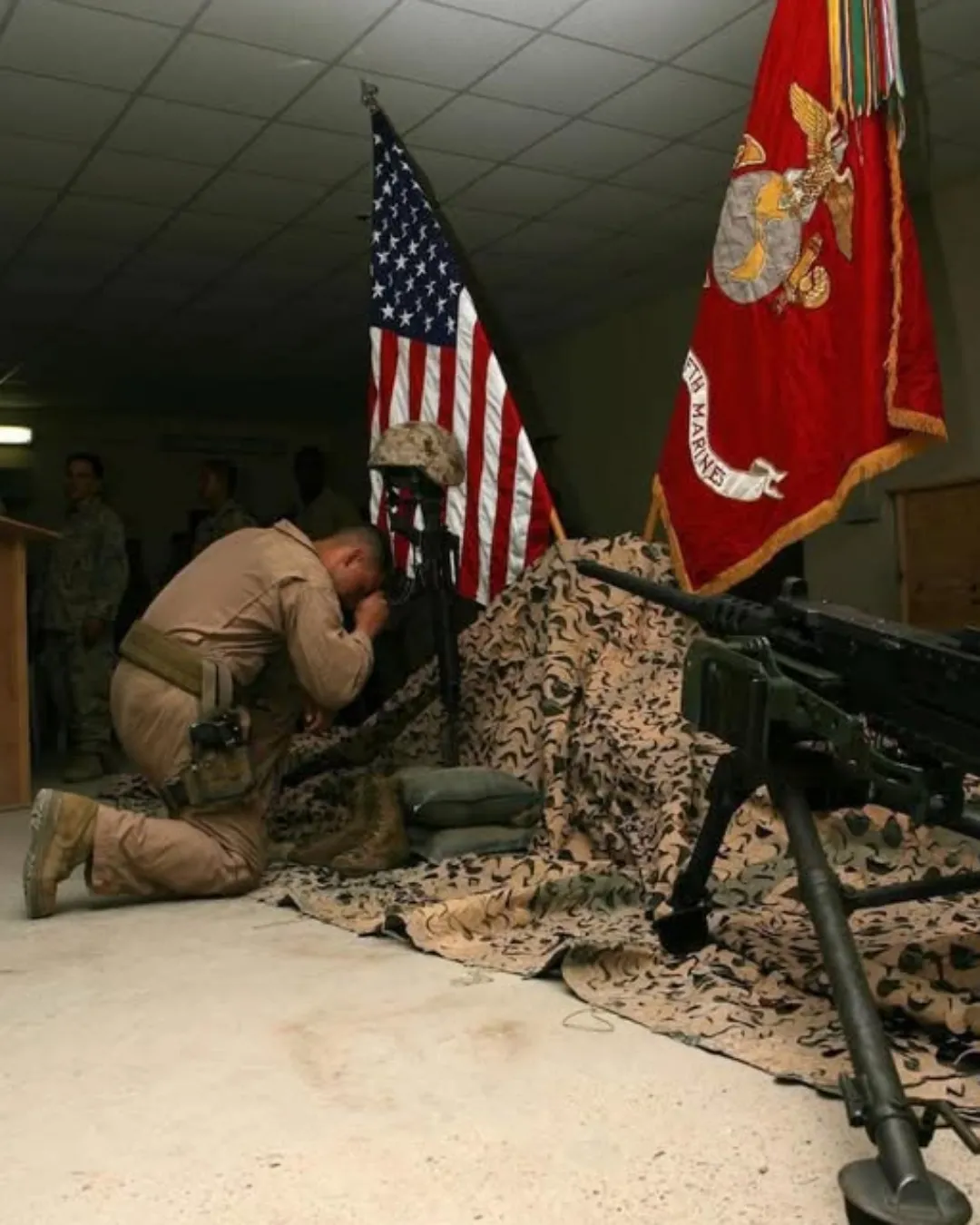
He was just 21 years old — a kid by most measures, but already a man shaped by discipline, duty, and a quiet strength that seemed older than his years. Lance Corporal Benito Ramirez, a machine gunner with Jump Platoon, Headquarters and Support Company, gave his life in service to his country on May 21, 2006. His name now lives among those who stood their ground when it mattered most — not because they sought glory, but because they believed in something greater than themselves.
For those who served beside him, Benito wasn’t just another Marine. He was the heartbeat of the platoon — steady, unshakable, the kind of Marine who never complained no matter how hard things got. Whether it was the scorching desert heat, the endless


Leave a Reply