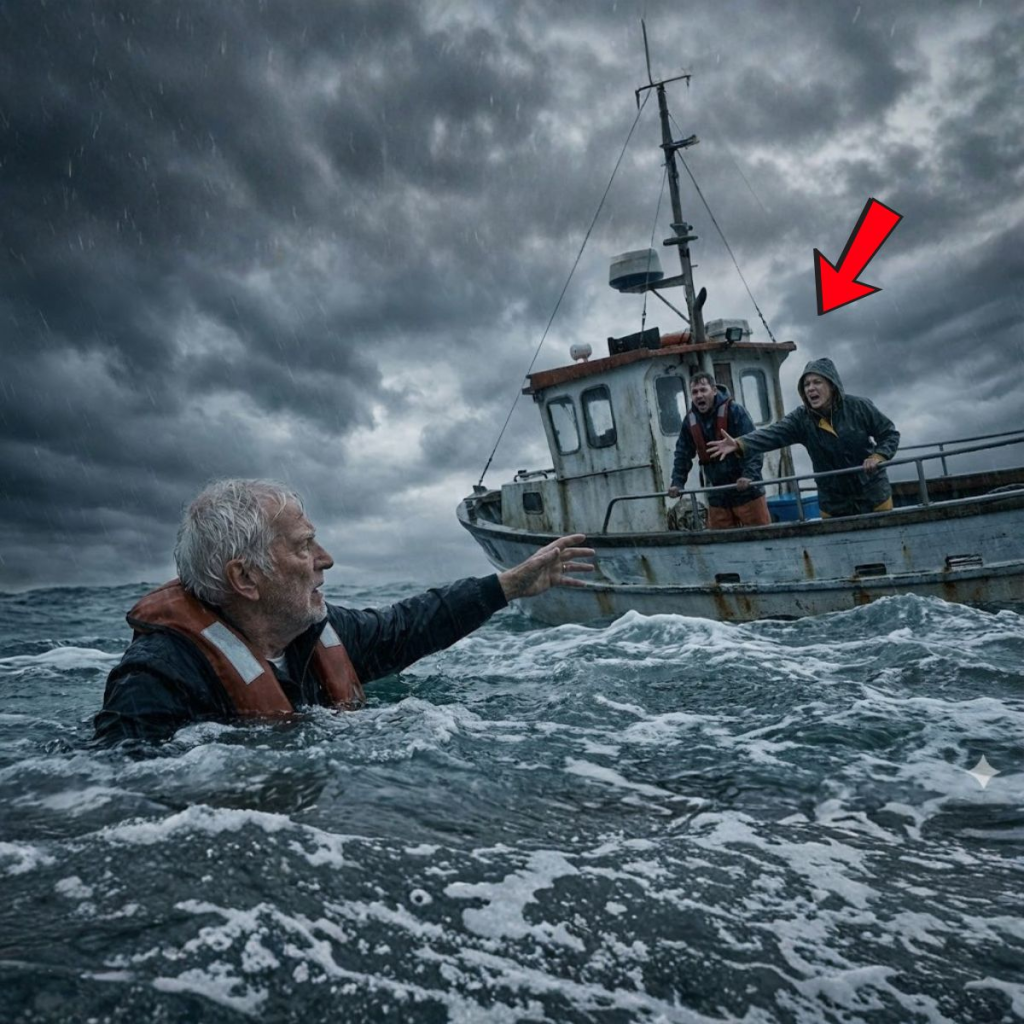
His children threw his 87-year-old father into the sea… they forgot that his entire life had been the sea.
—The sea couldn’t kill me. But you… you’ve already killed your own father.—
José Arlindo had spent almost his entire life believing that love, like the sea, always returned. It could recede, grow cold, even dangerous… but in the end, it always came back to the shore. This was how he had loved Lourdes for nearly sixty years. This was how he had raised his children. This was how he had trusted the blood that carried his last name.
He was born facing the ocean, in a stretch of coast where the houses were built with salt-laden wood and inherited patience. Before learning to read, he already knew how to distinguish the sound of a wave bringing fish from the sound of one bringing only wind. The sea was his school, his judge, and his refuge. It never betrayed him. It never lied to him. It never promised him something it couldn’t deliver.
With Lourdes, he learned the other kind of tides: those of human character. She was firm where he was soft, silent where he spoke too much. For decades, they were one. When she fell ill, José aged suddenly. When she died, something inside him broke silently. He kept breathing, walking, fishing… but he no longer expected anything.
His children did.
Bruno, the eldest, had stopped seeing his father as a man years ago and had started seeing him as a variable. To him, the house by the sea was not a home; it was an asset. The boat was not a shared memory; it was immobilized capital. The land José refused to sell was a wasted opportunity. Every wrinkle on his father’s face was, in his mind, lost time.
Thago, the second, lived trapped between loyalty and fear. He saw how the tension thickened at every meal, at every unfinished conversation, but he chose not to look too closely. He knew something was rotting, and he also knew that naming it meant facing it.
Carla, the youngest, was the only one who still listened to José. The only one who sat beside him without hurry. The only one who understood that her father’s silence wasn’t emptiness, but grief.
José felt it all. The impatient looks. The sentences that ended before they reached their conclusion. The arguments that stopped when he entered the room. And still, he kept believing that time would fix what ambition was breaking. Because a father wants to believe. Because admitting the opposite hurts more than any wound.
The boat ride proposal came wrapped in false nostalgia. Bruno spoke of honoring Lourdes, of remembering old times, of going out together as a family. José accepted without hesitation. The sea had always been a sacred place for him. There, he felt protected.
The sky was overcast, strange, as if holding its breath. The engine moved farther out than usual. José noticed, but said nothing. He trusted. He had always trusted.
It was Bruno who broke the silence.
There were no shouts. There was no visible anger. Just cold, measured, calculated words. He said it was time. That José had lived enough. That the house, the boat, the land… all of that should go to hands that knew how to make use of it. That clinging to the past was selfish.
José looked at him. Not with anger. Not with fear. With a sadness so deep it seemed like exhaustion. He tried to respond, but the push came first. Dry. Definitive.
The water was freezing….
The impact took his breath away. The waves didn’t recognize him. The sea, which had been his ally his entire life, made no exceptions that afternoon. He swam by reflex, by memory, by pure stubbornness. He heard a distant scream. He saw Carla’s face distorted by fear. He saw Thago paralyzed. He saw the boat moving away.
He thought of Lourdes.
He thought of his children as children, with their hands full of sand.
For the first time, he thought maybe he had failed.
When the water covered his face, he didn’t ask to be saved. He asked that his children not get lost forever.
For days, the town spoke in whispers. The old fisherman had disappeared. Bruno cried in front of everyone. Thago locked himself in silence. Carla didn’t sleep. The sea, indifferent, kept breathing.
Until it decided to return him.
Miguel, a young fisherman, recognized the body floating before accepting the reality. He didn’t hesitate. He jumped, held him, and called for help. José was alive, barely, hanging by an invisible thread.
He woke up in a hospital, smelling of disinfectant and salt. Carla was there. She didn’t scream. She didn’t speak. She just cried. José squeezed her hand with the little strength he had left. That gesture was worth more than any words.
He asked to see his children days later.
He spoke slowly. Without accusations. Without hatred. He told them he had thought a lot about the sea, about life, and about inheritance. That nothing he possessed should become a reason for destruction. That Miguel, the man who had nothing to gain, would be the custodian of the house. That money wasn’t a reward, but a test they had failed.
Bruno fell to his knees. He begged. He cried. He said it was fear, pressure, desperation. José listened to it all.
—The sea returned me —he said—. Forgiveness doesn’t always work the same way.
Over time, the house became a refuge for the elderly and fishermen without families. Bruno learned to work without giving orders. Thago learned to choose. Carla supported everyone.
José spent his final years watching the horizon. The day he died, the sea was calm.
Because some inheritances are claimed with violence.
And others are only understood when there’s no time left.



Leave a Reply