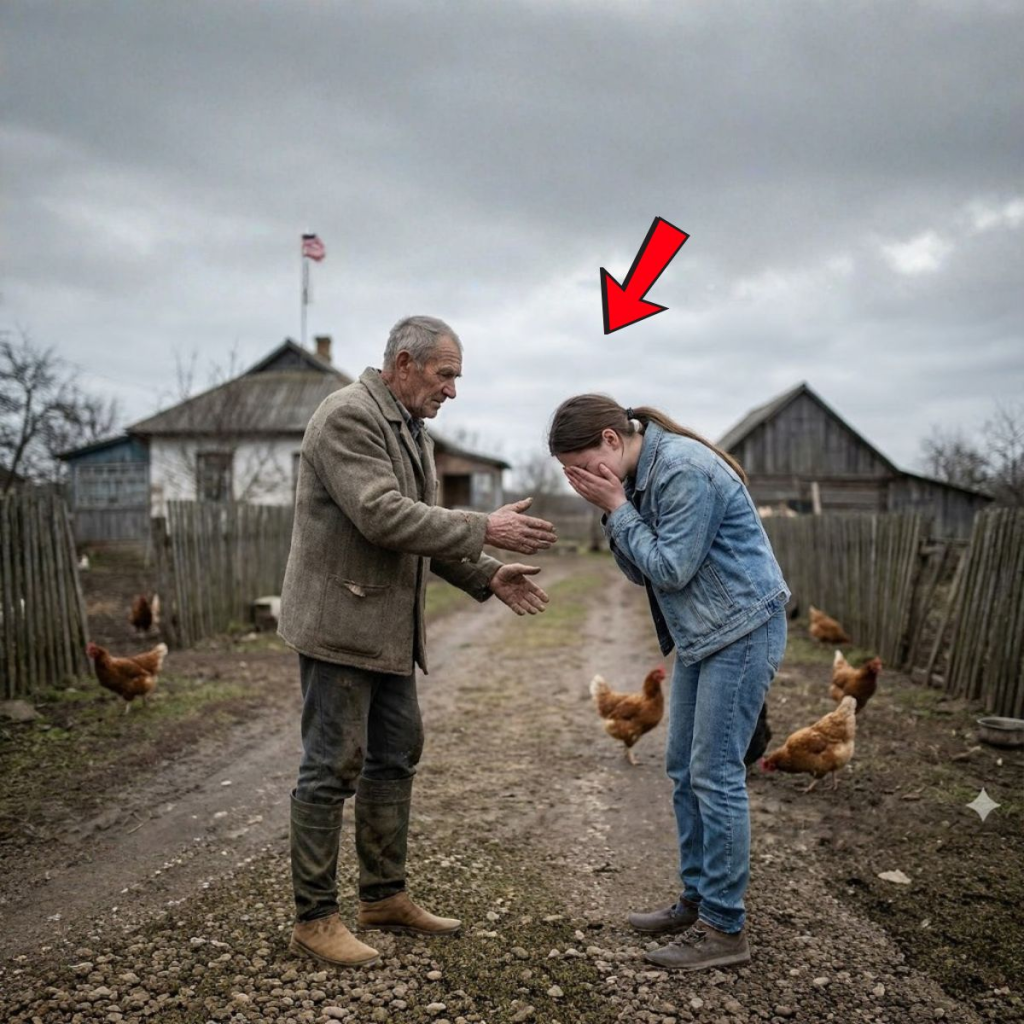
At seventy-two years old, Don Sebastián Morales no longer expected surprises. He had learned to live with the weight of the same days, with the echo of a large house where laughter had faded fifteen winters ago, when Beatriz — his wife — took everything without meaning to: the warmth of the table, the reason to wake up early, even the habit of whistling as he walked through the hallways. Since then, the estate “El Último Refugio” had been just that: a final refuge for a man who was still breathing, yes, but who felt as though his heart was always a step behind.
The town respected him, feared him a little, and looked at him with that strange mixture that people have for men with land, a name, and silence. He was neither cruel nor affectionate. He was… tired. Tired of speaking to portraits and dining in front of an empty chair.
Five years earlier, a young woman came asking for work. She was twenty-three then, with eyes that seemed to have cried too soon. Her name was Inés Vargas. She carried a small purse, a simple dress, and dignity pressed tight against her chest, as if held by a thread to keep her from falling apart. She had recently lost her father. She had no one. Just the need.
Don Sebastián, who no longer moved easily, listened to her in the kitchen. He didn’t ask too many questions. He simply said, “If you know how to cook and aren’t scared of the mornings, you can stay.” Inés nodded strongly, as though signing a pact with life.
At first, it was a practical arrangement. He needed meals that didn’t taste like ash; she needed a roof. But Inés didn’t limit herself to cooking. Over time, she opened windows that had been closed for years, put flowers in an old vase without asking for permission, and one day, a song slipped out while she was sweeping… and that song stayed floating in the house as if it had finally found a place where it didn’t feel ashamed to sound.
Don Sebastián began to look forward to lunchtime. Not for the stew, but to see her appear, to hear her “How did you sleep today?” with a naturalness that seemed almost insolent to him, as if loneliness weren’t a law. She asked him about the harvests, the weather, the memories. And he, without realizing it, answered.
The people in the town noticed that the estate no longer seemed like a mausoleum. “Since the girl arrived, the house has light,” they murmured. No one imagined what kind of light it was. Not even he did.
Until the city doctor — the only one with modern instruments and a voice of judgment — looked at him with professional pity and told him what no one wants to hear: advanced gastric cancer. “Three months… maybe four, if you’re lucky.”
Don Sebastián left the office with the same firmness one has when leaving a church after a funeral: with his body intact, but with something inside broken forever. He didn’t fear death. He feared dying as he had lived those fifteen years: in silence.
That night, he ate slowly. Inés had prepared his favorite stew with herbs from the garden. She hummed while washing dishes. He watched her as one watches a beloved landscape for the last time, and when the kitchen was clean, he called her.
— Inés.
She appeared drying her hands on her apron.
— Yes, Don Sebastián?
— Sit down.
The word “sit down” coming from his mouth was a tremor. Inés obeyed, and in her eyes appeared that fear only those who have had little feel: the fear of losing everything in one blow.
— I went to the doctor — he said directly —. I have cancer. I have three months.
The plate Inés was holding slipped from her hand. It fell and broke on the floor. The sound was dry, definitive. As if the house itself had understood.
— No… — she whispered, and the denial came out like a prayer —. It can’t be.
Don Sebastián took a deep breath. He had rehearsed this calm, but in front of Inés’s tear-streaked face, the calm turned into a lie.
— It’s true. There’s no treatment for me. All that’s left is time.
Inés cried without shame, with that great sorrow that cannot be hidden behind manners.
Then he said what he had come to say. He said it quickly, before his courage escaped him.
— Marry me.
Inés looked at him as if she had heard him speak in another language.
— What?
— Listen to me — he insisted —. I’m not asking for love. I’m asking for company. I have this estate, these lands… and I have no children. When I die, everything will go to a nephew I barely know. A man who has never worked, who would sell this in a week. If you marry me, everything will be yours. You will have security. A future.
Inés swallowed hard. The tears didn’t stop, but her mind worked like an urgent clock.
— And what do you gain?
Don Sebastián lowered his gaze, as if ashamed to need something.
— That they don’t let go of my hand in the end.
The silence hung between them. Inés stood up with a trembling body.
— I need to think.
— Take all the time you need — he said —. Just… it’s not much, Inés. It’s not much.
Three days later, Inés returned to the study without knocking, with a determination rare in someone who always asked permission even to breathe.
— I accept — she said.
Don Sebastián blinked, as though the world had changed color.
— Are you sure?
— Yes. But with one condition. I don’t want to be a contract. If I’m going to be your wife, even if just for a little while, I want to be it for real.
He felt something light up in his chest. Something dangerous. Something like hope.
They married in the small town church with Father Miguel, two witnesses, and a handful of curious neighbors. Inés wore a simple white dress that had been her mother’s; Don Sebastián wore a dark suit he had kept for sad occasions. When they kissed, it was chaste, awkward, more like a promise of care than a romance.
And still, the town was filled with gossip.
“Gold digger.” “Desperate old man.” “He probably can’t even get up anymore.” “She’s just waiting for the funeral.”
Inés heard those words at the market, in the square, in the very air. One afternoon, she returned to the estate with red eyes and a broken voice, and Don Sebastián found her crying in the kitchen.
— People talk — she said.
— People always talk — he replied, but the phrase didn’t reach to clean her sorrow.
Days passed and, against all odds, they began to look like a couple. They ate together, talked about harvests, improvements to the estate, memories. At night, they shared the bed with a respectful distance… until the pain came. One early morning, Don Sebastián doubled over at the desk, sweating, unable to breathe. Inés ran to him, held him, gave him the medicine, and stayed by his side, holding his hand as if that hand were a rope that kept him in this world.
— Thank you — he whispered.
— I’m your wife — she said —. That’s why I’m here.
And that’s when Don Sebastián truly got scared, because Inés’s care didn’t seem like an act. It seemed like a choice.
But then the truth that the town always finds — as if it has a nose for misfortune — came to light: Inés had debts. Big ones. Inherited from her father’s death. If she didn’t pay before the end of the year, she would lose the only humble little house she had left as a reminder.
The lawyer, Don Felipe, told her delicately, but the phrase fell like a stone.
Don Sebastián felt the cancer had already revealed its bite, and now the heart too.
That night, he looked at Inés with a tiredness that came from farther away than the disease.
— Tell me the truth — he asked —. Did you accept for the inheritance?
Inés stood still. The silence betrayed her before her mouth did.
— I need the money — she admitted at last —. The debts are real. Yes… I need them.
Don Sebastián closed his eyes. He wanted to be generous. He wanted to understand. But what he felt was a blow to the chest that couldn’t be healed with medicine.
The following days grew cold. He barely spoke. She tried to explain and couldn’t find a way, because how do you explain love mixed with urgency without it sounding like a lie? She moved into the guest room, as if the hallway between the rooms were an ocean.
Then an anonymous letter appeared under the door: exact numbers, dates, cruel insinuations. “Convenient, right?” It also said that three men from the town had offered to pay her debt in exchange for “favors,” and that she had rejected them… hoping for something better.
Don Sebastián confronted her with a thin voice.
— Is it true?
— Yes — she said, her face pale —. They offered it to me.
— And you rejected them?
— Yes.
— Why?
Inés looked at him as if he had asked her why water wets.
— Because they wanted to buy me.
— And with me, it’s not a purchase? — he spat, wounded —. I also offered you something. You needed it. I needed it. What’s the difference?
Inés trembled with rage and pain. And then she slapped him softly, more humiliating for him than for her.
— How dare you! — she whispered. — How dare you reduce me to that?
Don Sebastián stood staring at the wall, defeated.
— I don’t know who to trust anymore — he said.
Inés looked at him with tears in her eyes, but without pleading.
— Then there’s nothing left to say.
And she left.
It didn’t take long before Don Sebastián’s body started paying the price for that emotional poison. He began coughing up blood. The doctor came, examined him, and lowered his voice as if extinguishing a candle.
— Weeks… maybe days.
That night, Inés entered his room with a firmness that left no room for pride.
— I won’t let you die alone — she said. — Whatever you think of me, I won’t abandon you.
Don Sebastián wanted to protest, but weakness left him with no strength. Inés sat beside him, holding his hand. The hand of a seventy-two-year-old man who for the first time felt like a scared child.
— I need to know the whole truth — he murmured —. Before…
Inés took a deep breath, as if diving into cold water.
— Yes, I had debts. Yes, I needed money. But that’s not what made me stay.
Her voice trembled.
— I… I was already in love with you.
The air became thick.
— What? — he managed to say.
— Five years ago — Inés continued, and tears ran down her face uncontrollably —. I came broken. Without a father. Without family. And you gave me work, respect, dignity. You looked at me as a person. You spoke to me calmly when others screamed. And I… I fell in love slowly. Without wanting to. With shame. Because you were a widower, because I was the cook, because you were… forty-four years older.
Don Sebastián barely breathed.
— Then, why did you accept?
— Because when you proposed to me… — Inés squeezed his hand — I thought: I’d rather have three months as your wife than a whole life loving you from afar. I was going to refuse it out of fear that you’d always doubt, out of fear of judgment… but I didn’t want to lose the chance to know what it felt like to be by your side with your last name, even if just for a little while.
Don Sebastián cried. He cried like he hadn’t since Beatriz.
— I loved you too — he confessed, finally —. For years. And I hated myself for it. I thought it wasn’t fair. That I was stealing your future.
Inés smiled through her tears, almost with tenderness.
— We’re both idiots.
They hugged each other with desperate care. A kiss, now real. A kiss of forgiveness, of fear, of love out of time.
Don Sebastián fell asleep that night with the peace of someone who no longer carries suspicions, and the next day, the unthinkable happened: the doctor returned, examined him, frowned.
— I don’t understand… the tumor is shrinking.
Inés put a hand to her mouth. Don Sebastián cried, not only from joy, but from that vertigo that comes when life changes its plans.
— Now they’ll say you knew — he whispered, scared.
— Let them say whatever they want — she replied firmly —. You and I know the truth.
The months turned into years. Don Sebastián lived for seven full years. Seven years that the town, over time, stopped looking at with morbid curiosity and started looking at with respect. They had a second wedding, this time with a real celebration. Inés wore a new dress, Don Sebastián smiled like a young man, and Father Miguel cried without hiding.
They worked together on the estate. Inés brought new ideas; Sebastián provided experience. “El Último Refugio” flourished. And with the work, Inés paid off her debts with her own effort. The day she paid the last peso, she cried with relief, not because of the amount, but because of the symbol: no one could tarnish her love with suspicion.
In the seventh year, the cancer returned, this time without miracles. Don Sebastián was seventy-nine; Inés, thirty-five. One spring night, with the soft song of crickets and the smell of wet earth, he squeezed her hand.
— Thank you… for loving me when I was just old, alone, and hard to love — he whispered.
— You were always easy to love — said Inés, though her voice cracked —. You were just hidden behind the fatigue.
Don Sebastián died without fear, because he did not die in silence. He died supported.
Afterward, the town waited for what it always waits for: that she would sell everything and disappear. But Inés didn’t leave. She turned the inheritance into something that held the same weight as a “I love you” said at the right time: she built a school for poor children, a clinic, and a fund to help indebted families.
— No one should have to choose between dignity and survival — she said.
And with the years, the same people who had called her a gold digger ended up calling her madam, then Doña Inés, and later simply “the woman who truly loved.”
She never remarried. Not because she couldn’t, but because when asked, she responded with a serenity that disarmed:
— I already had the great love of my life. Why seek a shadow when I’ve already known the sun?
Much later, with silver hair and hands full of wrinkles, Inés sat on the porch of “El Último Refugio” looking at the fields. Not as property, but as living memory. And if anyone dared to judge her — because there’s always someone — she smiled, as if she had already paid all the important debts.
Because the truth was simple, and sometimes the simple is the hardest to believe: love appeared where no one expected it. The town learned late, as it usually does. But it learned.
And that’s how the story that started with scandal ended with a lesson: love is not measured by ages or promised months, but by the depth with which two people choose each other, even when the whole world tells them it’s impossible.


Leave a Reply