My Sister Left Her “Mute” 8-Year-Old With Me While She Went on a Cruise — The Moment the Door Closed, My Niece Looked at Me and Warned, “Don’t Drink the Tea,” Exposing a Family Secret Built on Silence, Control, and a Plan That Was Already in Motion
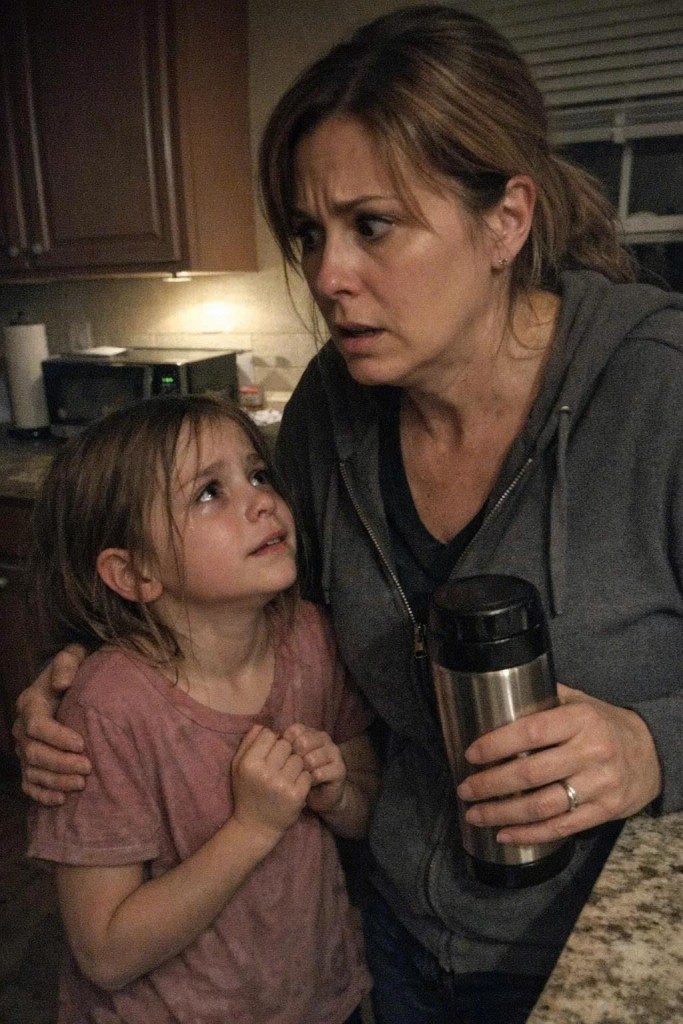
My sister and her husband went on a cruise, leaving me to babysit her eight-year-old daughter who everyone believed was born mute, and the second the front door clicked shut, she looked straight at me and said in a clear, steady voice that didn’t tremble at all, “Auntie, don’t drink the tea Mom made… she planned something bad,” and in that exact moment I understood that whatever I thought I knew about my family had been carefully staged for years, and I had just stepped behind the curtain.
My name is Laura Bennett, I am thirty-four years old, and until that night I believed I lived a quiet, predictable life built on spreadsheets, routine, and the comforting idea that blood meant safety, which is probably why the sound of that single sentence coming from my niece, Elise, cracked something inside me so deeply that I had to grab the kitchen counter just to stay upright.
The house was silent except for the hum of the refrigerator and the distant sound of my sister Monica laughing somewhere in my memory, the echo of her hug from minutes earlier still lingering on my shoulders, and the thermos she had pressed into my hands sat on the counter like an innocent object pretending not to be a threat.
“Elise,” I said slowly, lowering myself so we were eye level, my voice barely working, “you can talk?”
She nodded, lips pressed together tightly as if she’d already said more than she was supposed to, her hands twisting nervously in the hem of her sweater.
“I always could,” she said. “Mom said I shouldn’t.”
The world didn’t explode or spin, it simply tilted, as if reality itself had been quietly rotated while I wasn’t paying attention, and suddenly nothing sat where it used to.
“Why would she say that?” I asked, already afraid of the answer.
Elise glanced toward the hallway, then back at me, and leaned in closer, lowering her voice even though we were alone.
“Because when I talk, bad things happen,” she said carefully, like she was reciting something she’d been taught. “She said if I ever spoke, you’d get hurt.”
I felt something cold crawl up my spine, not panic yet, but recognition, because fear taught early doesn’t look dramatic, it looks calm and obedient and devastatingly effective.
We sat there for a long time, the two of us on the kitchen floor, and piece by piece Elise told me the truth that had been living silently in that house for five years, a truth no one had bothered to listen for because it didn’t scream.
She wasn’t born mute. She wasn’t damaged. She wasn’t broken.

When she was three, she overheard her mother on the phone late one night, talking about money, about signatures, about me being “temporary” and “easy to handle,” and when she asked an innocent question the next day, Monica’s response wasn’t reassurance, it was control.
Elise told me how her mother knelt in front of her, gripped her arms too tightly, and said words that no child should ever hear from someone they trust.
“If you talk,” Monica had said, “your aunt will get very sick, and it will be your fault.”
So Elise stopped.
Not because she couldn’t speak. But because she loved me enough to give up her voice.
I held her while she cried silently against my chest, five years of fear unraveling all at once, and when she finally pulled back she looked at me with a seriousness far beyond her age.
“She’s doing something now,” Elise said. “That’s why I talked.”
I looked at the thermos again, at the tea my sister insisted I drink, and suddenly all the little things I’d ignored over the years lined up perfectly, like numbers finally balancing after a long mistake.
Monica’s insistence on managing Mom’s finances during her illness. Her irritation when Mom added me as a co-signer on the trust. Her habit of dismissing my questions with jokes and affection.
I didn’t cry. I didn’t scream.
I made a plan.
The first thing I did was call Rachel Moore, my best friend since college and a registered nurse who had seen enough of humanity at its worst to recognize danger when it whispered instead of shouted.
When she arrived and heard everything, she didn’t hesitate, she didn’t question Elise, she simply said,
“We test the tea, we document everything, and we don’t tip your sister off.”
The lab results came back within hours.
The tea contained a sedative compound mixed with something designed to cause severe gastrointestinal distress, nothing fatal, just enough to put someone in a hospital bed long enough to miss important meetings and sign nothing.
Monica wasn’t trying to end my life. She was trying to remove me from the equation.
While Rachel handled the medical evidence, I went into Monica’s home office, a space she guarded obsessively, and found exactly what Elise said I would: forged documents, practice signatures, bank statements showing steady withdrawals just under reporting thresholds, and emails arranging an emergency legal transfer in another state while I was meant to be “recovering.”
I photographed everything. Every page. Every timestamp.
Then I made the hardest call of my life, to Andrew Cole, a former classmate who now worked as a federal financial crimes investigator, and when I finished explaining, there was a long pause on the other end of the line.
“Laura,” he said finally, “do not confront her. Do exactly what she expects you to do. We’ll take it from here.”
So I played my role.
I called Monica and left a weak, frightened voicemail about being sick, about not being able to keep anything down, about possibly going to the hospital, and she responded exactly how someone guilty responds when their plan is working: with relief disguised as concern.
Over the next two days, law enforcement quietly moved into place, tracking Monica and her husband Paul, who were not on a cruise but in a hotel two states away preparing to finalize documents they believed no one would challenge.
They walked into a conference room expecting signatures.
They walked out in handcuffs.
Fraud. Forgery. Conspiracy. Child abuse charges related to coercive control.
Everything unraveled at once.
Elise was placed temporarily in my care while protective services completed their investigation, and the first night she slept in my guest room, she knocked on my door quietly and asked,
“Is it okay if I talk now?”
I knelt in front of her, took her hands, and said the only thing that mattered.
“You never have to be silent again.”
Therapy came next. Healing took time.
But children are resilient when they are finally believed.
Monica lost custody permanently. She lost access to the trust. She lost the image she’d carefully built.
I gained something far more valuable than money.
A child who laughs now. A voice that tells stories. A family built not on blood, but on protection and truth.
Sometimes people ask me how I didn’t see it sooner, and I tell them the truth, which is that evil doesn’t always look like a monster, sometimes it looks like a sister making tea, smiling, counting on your silence.
And sometimes, the bravest person in the room is the one everyone assumes can’t speak at all.


Leave a Reply