A Poor Man Went to Ask for Work on a Farm… Without Knowing the Owner Would Change His Life
The sun fell like molten lead on the dirt road when Emiliano Ortega finally saw the white fence stretching out in the distance—long and firm, as if it marked the boundary between two different lives.
Beside him, Renata, his seven-year-old daughter, walked in silence, dragging her feet slightly. The little girl pressed a rag doll tightly against her chest, dressed in a patched-up dress. The doll had black yarn hair and a smile stitched with red thread.
“What’s her name?” people had asked many times at the shelters.
Renata always answered the same way, with the seriousness of someone guarding a sacred secret:
“Luna.”
Emiliano carried an almost empty backpack: two changes of clothes, folded papers inside a plastic bag, and nothing else. Nothing that sounded like a future. Nothing that weighed as much as a “plan.”
Because the truth was simple and cruel: he had lost everything.
He had once had a steady job in Guadalajara, a small but clean apartment, an old car he used to get around. And above all, he had had Mariana. His wife. The voice that told him, “Everything will be okay,” even when it wasn’t.
But cancer didn’t listen to promises, prayers, or schedules. It took Mariana slowly, without hurry, as if it had every right in the world. In the hospital, when she could barely speak, she held his hand with a strength that didn’t seem human and said:
“Take care of her… no matter what happens.”
And Emiliano, his throat breaking, replied:
“Always.”
Three months later, they were sleeping in shelters, inventing “adventures” so Renata wouldn’t understand the magnitude of the disaster.
“We’re on a journey, my love. Soon we’ll arrive at a beautiful house.”
Merciful lies that crushed his chest every time he said them… but allowed him to keep walking.
Now he was walking toward a sign that felt like a cruel joke from fate.
SANTA CLARA HACIENDA, it read.
Emiliano stared at the letters for a moment, as if they were a sign. He wasn’t religious, but at that moment anything helped keep him from collapsing. Santa Clara… like his little girl. Like the name he himself had chosen for his daughter before changing it at the registry office because Mariana said “Renata sounds like light.”
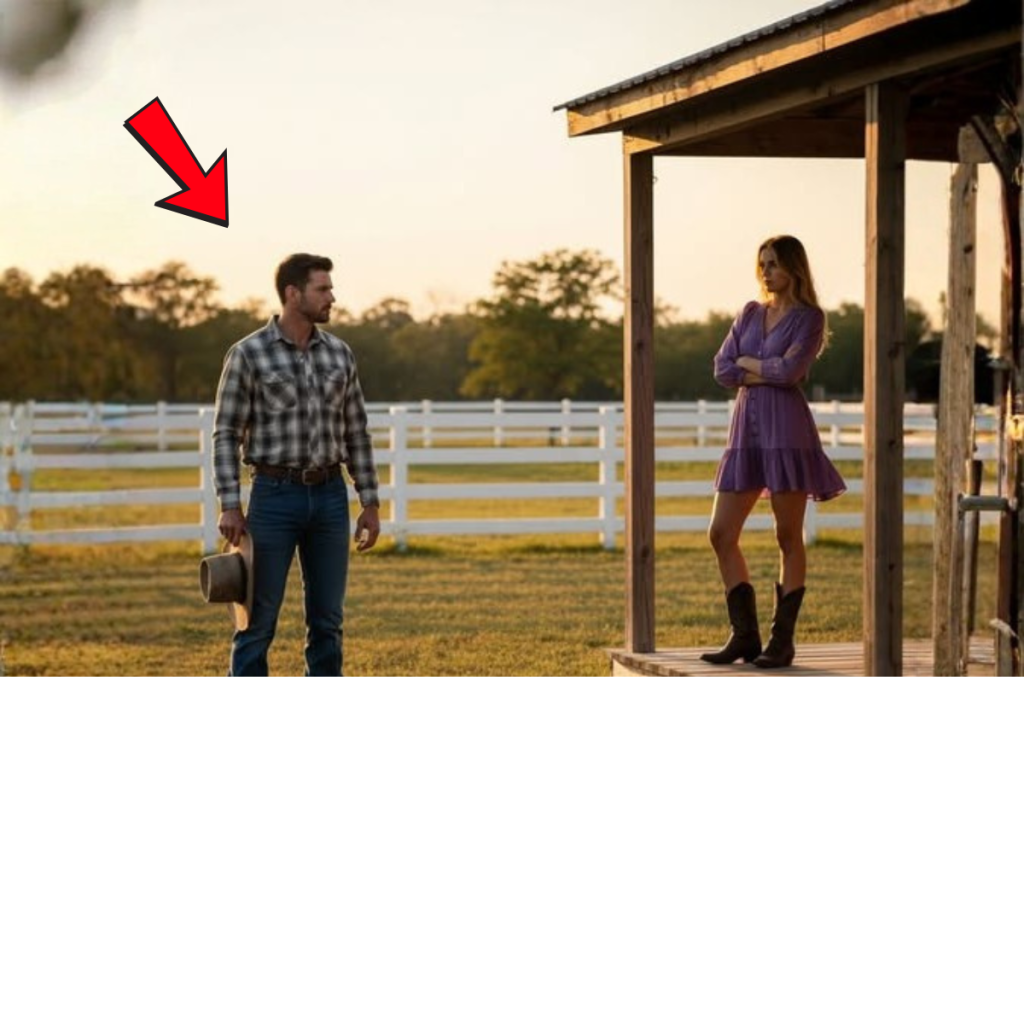
Behind the fence, the grass was truly green—not the tired green of city parks. Horses grazed peacefully. Farther back stood a large, white, two-story house with a wide porch and wooden chairs, as if someone had taken a postcard of the Mexican countryside and planted it there.
Emiliano felt ashamed of his sweat-soaked clothes, his old hat, his worn boots. But he didn’t turn back. He no longer had dignity left to protect—only the promise.
He knocked on the door.
A few seconds later, an older woman appeared, wearing a kitchen apron, with steady eyes and hands shaped by a lifetime of work.
“Yes?” she said—not rudely, but with the caution of someone who had seen too many people ask for help and then fail.
Emiliano swallowed hard.
“I’m looking for work… anything. I know repairs, fences, animals… and what I don’t know, I’ll learn.”
The woman looked him up and down, then glanced at Renata, who stood silently, clutching Luna tightly.
“Wait here a moment,” she said, as if the decision weighed more than she wanted to admit. “I’ll call the lady.”
She disappeared inside the house.
Emiliano stayed there, his heart pounding against his ribs, breathing in the smell of freshly brewed coffee, warm bread… home. A word that, lately, felt almost like an insult.
And then he saw her.
She wasn’t an elderly widow or a bossy woman. She was young—maybe around thirty—wearing a purple dress and worn leather boots. Her brown hair fell loosely around her shoulders, her eyes green like new leaves… but what struck Emiliano most wasn’t her beauty.
It was the exhaustion.
Not from sleep. Not from work. An old weariness, buried deep in her gaze, as if she were carrying a world no one wanted to help her hold.
She leaned against the doorframe, watched him for a moment, and asked bluntly:
“Can you fix fences?”
“Yes.”
“The one in the east pasture has been falling apart for months.”
“I’ll fix it.”
She looked at him like someone who no longer believes in promises—but still needs one.
“Why should I hire you?”
Emiliano didn’t invent stories. He didn’t sell himself.
“Because I have nowhere else to go. And when a man has no options… he works harder than anyone.”
A long silence. She looked down at Renata and crouched to her level.
“What’s your name, sweetheart?”
“Renata,” the girl said softly.
“And the doll?”
“Luna… my mom made her.”
The woman blinked, as if the words had struck her from the inside.
“And where is your mom?”
Renata looked at Emiliano, asking permission to tell the truth.
“In heaven… but my dad says she watches us.”
The woman closed her eyes for a second.
Emiliano noticed it: something broke inside her—but she didn’t collapse. She straightened up, looked toward the house, and said firmly:
“Doña Chela… prepare the barn room. The one with the bathroom.”
The older woman widened her eyes.
“Miss Valeria…?”
“They’re staying,” the young woman declared. “Tomorrow we’ll talk about the job.”
Emiliano didn’t know what to say. Thank you wasn’t enough. He only nodded, meeting her eyes, hoping she understood the silent language of someone standing at the edge.
That night, for the first time in weeks, Renata slept in a real bed. Not on the floor. Not afraid. Not hugging empty air. Emiliano sat by the window of the barn room, watching the moon light up the hacienda like a promise.
He took out an old notebook, nearly out of pages, and wrote as he had every night since Mariana died:
“Mariana… I found a place. I don’t know if it will work. But today Renata slept peacefully. For today, that is enough.”
The next morning, Emiliano woke before dawn and went straight to the east pasture fence. It was worse than Valeria had described: loose posts, fallen wire, rotten wood. An accident waiting to happen.
He took off his jacket, hung his hat on a post, and began working with his hands as if they were the only prayer he knew.
An hour later, Valeria came out to the porch with a cup of coffee. She saw him kneeling, soaked in sweat, working as if the hacienda were his own—and froze, unsure what to do with someone who fixed things without being asked.
“Who sent you out so early?” she asked, approaching.
“No one,” he replied without looking up. “But a broken fence is always trouble.”
Valeria tightened her grip on the cup.
“Breakfast is ready,” she said—and that was her thank you without saying thank you.
The days became a new routine. Emiliano repaired doors, roofs, water pumps. Renata ran through the fields as if the grass were giving back the childhood the city had stolen from her. And Valeria, who at first watched from a distance, began to relax—as if every straight nail lifted a weight from her chest.
On Friday, Valeria called him into the office to pay him.
“How much do I owe you?”
Emiliano named a number. Valeria frowned.
“That’s too little… you worked all week.”
She handed him more bills.
“Keep the change.”
Emiliano looked at the money but didn’t take it.
“I charge what’s fair. No more, no less. I don’t take charity.”
Valeria stood there with her hand extended, confused. All her life people had tried to take something from her—her inheritance, her pride, her control. And this man… rejected money out of dignity.
That same week, Renata found Estrella.
She was an old mare, kept at the back of the stable, separated from the others. She had once been the pride of Valeria’s grandfather, a champion in her time. Now she was thin, unwilling to eat, her eyes dull.
Renata sat beside her as if they had been friends forever.
“I know you’re sad,” she whispered. “I was sad too… but my dad says if I’m still here, it’s because my mom is watching me.”
Emiliano froze when he heard his daughter using his own words—like a thread pulling straight back to his heart.
From that day on, father and daughter cared for Estrella. Emiliano read the grandfather’s old books, learned about feeding, patience, invisible wounds. Renata spoke to her every day, told her stories, placed Luna nearby to “keep her company.”
A month later, Estrella stood firmly on her feet for the first time. Renata screamed as if she had won the world. Valeria, watching from the doorway, covered her mouth so she wouldn’t cry in front of them.
“Why did you do this?” she asked later, her voice broken. “I didn’t ask you to. I didn’t pay you for this.”
Emiliano looked at his daughter hugging the mare.
“Because my daughter taught me something… caring for what is broken is the only way not to break yourself.”
Life, as if it couldn’t tolerate so much calm, struck one afternoon.
Valeria fell from the barn roof.
She had insisted on fixing it alone—stubborn, determined to prove she didn’t need anyone. She slipped on a loose tile and ended up on the ground, her ankle twisted, rage-filled tears on her face.
Emiliano found her sitting in the dirt, staring into nothing.
“I can’t do anything right,” she murmured. “My grandfather took care of this place for forty years, and I can’t even fix a roof.”
Emiliano sat beside her in silence. He didn’t comfort her with pretty words. He waited, the way you wait for someone who is collapsing inside.
“Do you know how many times I fell this year?” he finally said. “I lost count. I learned that falling isn’t the problem… staying on the ground is.”
He stood and offered her his hand.
“Come on. I’ll fix the roof. You tell me where it leaks.”
Valeria looked at that hand as if it were more than help—as if it were permission to breathe.
And she took it.
One night, weeks later, Valeria came down to the kitchen and found him writing in his notebook.
“What’s that?” she asked.
Emiliano looked up.
“Letters… to my wife.”
Valeria didn’t mock him. She didn’t run away. She simply sat across from him, as if she understood.
“My grandfather used to write me letters when I was a child,” she said. “I kept them all.”
“Do you still read them?”
“Every night… it’s the only moment I don’t feel alone.”
The silence that followed wasn’t uncomfortable. It was a bridge.
And on that bridge, without promises, they began to save each other.
But the hardest part came when a black sedan arrived—shiny, untouched by the dust of the road.
Two people stepped out, dressed expensively, with cold eyes: Valeria’s parents.
“This is ridiculous,” her mother spat. “Sell the hacienda. Come back to the city. Marry someone on your level.”
Her father looked at Emiliano with contempt.
“You’re not going to keep playing ranch girl with a farmhand and his daughter.”
Renata squeezed Emiliano’s hand.
“What’s a farmhand, Daddy?”
Emiliano didn’t lower his voice.
“A word small people use to feel big.”
Valeria stepped in front of them, firm like a newly repaired fence.
“Get out. Of my hacienda.”
“You’re making a mistake,” her father threatened. “That property is worth a fortune.”
“I’d rather this a thousand times than be like you,” Valeria replied coldly. “And I decide who is welcome here.”
They left in a cloud of dust… and a threat hanging in the air.
The lawyer’s letter arrived a week later: they were contesting the will. They wanted Valeria declared “unfit” to manage the property, to take the hacienda and sell it.
Valeria collapsed at the desk.
“They’re going to take everything from me… everything my grandfather left.”
Emiliano felt a clean rage—the kind that doesn’t shout, but fights.
“They won’t.”
“How do you know?”
Emiliano looked at her and said the word that changed everything:
“Because we won’t let them.”
That we was a vow.
Over coffee, Doña Chela told Valeria Emiliano’s full story: Mariana, the hospital, the shelters, the hidden hunger. Valeria listened with wet eyes and a tightened heart.
That afternoon, she found him in the stable.
“Why didn’t you tell me?”
Emiliano let out a sad laugh.
“What was I supposed to say? ‘Hi, I lost everything, my wife died’? Not a great introduction.”
Valeria stepped closer.
“I lost too… my grandfather, my confidence, my peace. And I found something here—with you.”
And then, without fear, she kissed him. It wasn’t perfect. It was real.
Her parents returned with an enormous offer. Enough money to erase problems—with one condition:
“That the worker and his daughter leave.”
That night, on the porch, Emiliano said painfully to Valeria:
“Accept it… Renata and I… we survived before.”
Valeria stood up, furious.
“No! All my life people told me what to do. And my heart is telling me to stay… with you, with Renata.”
She took the phone. Dialed. And when they answered, she said calmly:
“The answer is no. Don’t call again.”
She hung up.
Then she walked to Emiliano, held his face.
“I choose you. Do you understand? You.”
And Emiliano felt, for the first time in years, that the world made sense again.
On a Tuesday morning, the final envelope arrived. No threats. No poison. Just a clear letter: the case was closed. The will was solid. The hacienda belonged to Valeria. Forever.
Valeria read it three times. Then she stood still, as if her body had forgotten how to live without fear.
“We won,” she whispered.
Doña Chela hugged her, crying. Emiliano came in with dirt on his boots, read the letter, and smiled with a light that transformed his face.
That night they celebrated simply: dinner on the porch, wine from their neighbor Don Ramiro, Renata’s laughter chasing fireflies, Estrella strong in the pasture, Luna in her new dress.
Later, when everyone was asleep, Emiliano opened his notebook and wrote one last letter to Mariana—this time not with pain, but with gratitude.
Valeria found him there, writing by candlelight.
“Can I listen?” she asked.
Emiliano nodded.
He read slowly:
“Mariana… today Renata laughed like she hadn’t since you left. I’m not writing to tell you what hurts… I’m writing to tell you what lives. I love you always. But today I understand that the heart doesn’t end. It transforms.”
Valeria squeezed his hand.
“You don’t have to stop loving her to love me,” she said.
“I know,” Emiliano replied. “That’s why I can do both.”
The next morning, Renata approached Valeria in her pajamas, hugging Luna.
“Are you going to stay?” she asked fearfully. “You won’t leave like in other places?”
Valeria felt her chest break, but she knelt to her height and spoke clearly:
“I’m not going anywhere. This is my home… and if you want, it can be your home too.”
Renata looked at Luna as if consulting her.
“Luna says yes,” she whispered.
And she threw herself into Valeria’s arms with all the strength of her little body.
Emiliano watched them from the doorway, saying nothing. His eyes were wet, his heart full—as if, at last, he could rest.
Because sometimes life takes everything from you… just to push you toward a door you didn’t know existed.
And when that door opens, you don’t just find work or shelter.
You find home.
Not a place.
People.


Leave a Reply