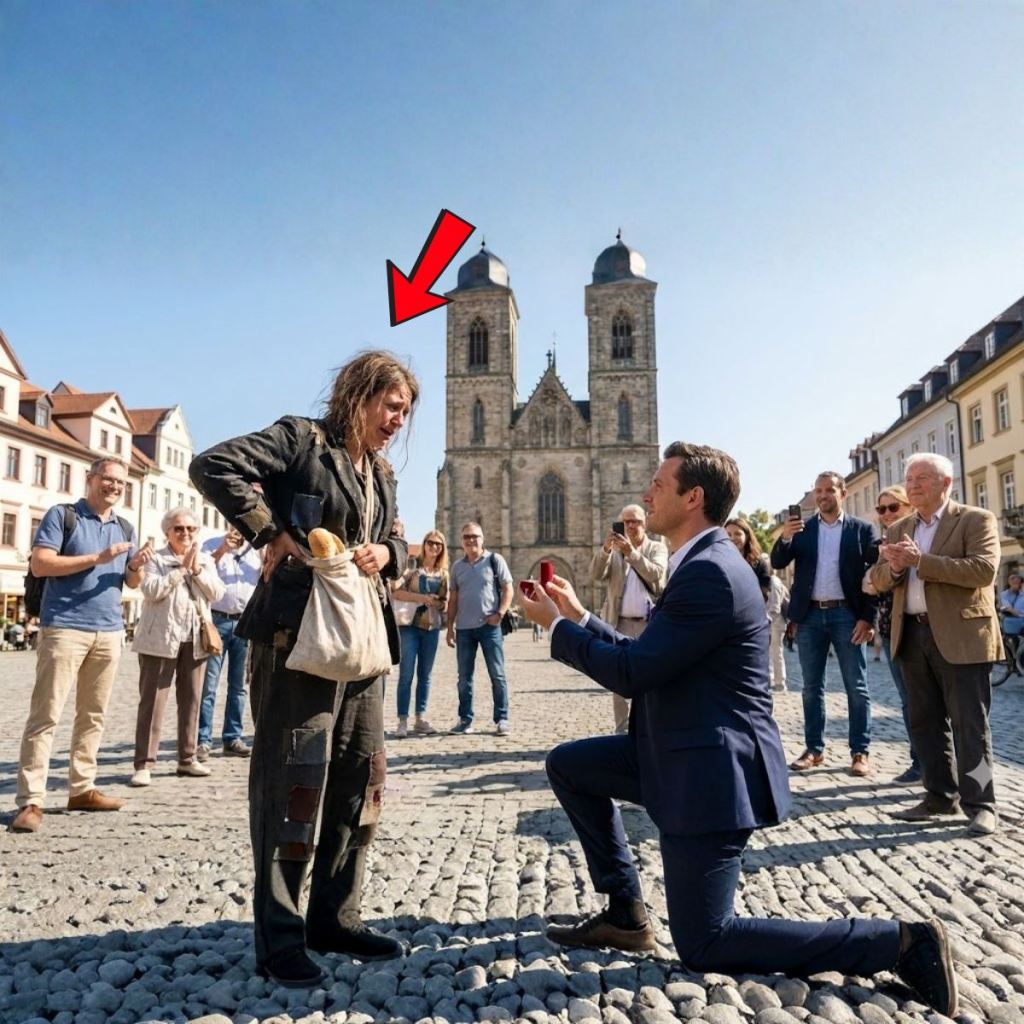
Alma Ríos didn’t know exactly when she had started living with a tight stomach.
Maybe it was the day her name appeared in a mass email from the University of Guadalajara: “Investigation initiated for plagiarism.” Or maybe it was weeks later, when her key stopped opening the door to her apartment in Colonia Americana, and the landlord spoke to her from the other side, as if she were a dangerous stranger. The truth was that, at thirty-two, the former Literature professor was rummaging through a trash bin in Plaza Tapatía, searching for scraps that didn’t yet smell of defeat.
The sun was beginning to set, and the shadow of the Guadalajara Cathedral stretched across the floor. Alma carefully separated a piece of bread wrapped in a napkin. It wasn’t disgust she feared: it was that someone might see her and recognize her.
“You’re not ugly,” a male voice said, too close. “You just need to dress better… and marry me.”
Alma froze, the plastic bag pressed against her chest like a shield. She raised her gaze. The man was tall, wearing an impeccable suit, shiny shoes, and a confidence that seemed impossible in a world where people pretended not to see her.
“Excuse me?” she whispered.
The stranger, without waiting for a response, knelt right there, among tourists and vendors. He pulled out a small red box and opened it. A ring sparkled mockingly under the last light of the sunset.
“I know this sounds absurd,” he said, “but I need your help.”
Alma took a step back.
“Get up. You’re… making a fool of yourself.”
“I’m not crazy. I’m desperate.”
Several people stopped. A child tugged at his mother’s sleeve to point. Alma felt the heat of the gazes, that fire that burns more than hunger.
“Who are you?” she asked, her voice trembling.
“Gael Navarro,” he replied, carefully closing the box. “And I have twenty-three days to get married, or I lose the family business.”
Alma let out a brief, dry laugh.
“And you think the solution is… buying a wife off the street?”
Gael’s eyes didn’t narrow or get offended. Instead, they hardened, as if accepting a blow he deserved.
“It’s not charity,” he said. “It’s a deal. You help me, I help you.”
Alma pressed her arms against her body. Her clothes were only half clean; her hair, tied back with an overstretched elastic band, seemed like a confession. Yet, within her, there existed that part of her that corrected essays with red ink and debated metaphors as if they were matters of life or death.
“Explain yourself.”
Gael slowly stood up, without invading her space.
“My grandfather left a clause: if I’m not married by the time I’m thirty-five, everything goes to my cousin Renata. And Renata…” His mouth tightened. “Doesn’t want the company to keep it. She wants to sell it for parts.”
“And why me?”
Gael put the ring away, as if not wanting to use it to pressure her.
“Because I’ve seen you here for several weeks. You don’t insult, you don’t beg. Even when they treat you badly, you say thank you. You have dignity.”
That word hit Alma in the chest like something that hurt because it was true. She tried to look away, but it was too late: the emotion rose to her eyes.
“You don’t know anything about me.”
“I know you didn’t choose to be here,” Gael said with certainty that scared her. “And I know someone broke your life.”
Alma swallowed hard, a mix of anger and shame.
“Marriage is not a game.”
“It would only be on paper. Six months. No intimacy, if that’s what you want. I’ll give you five hundred thousand pesos. Half now. The other half at the end. And…” He paused. “You help me convince my grandfather this is real.”
Five hundred thousand. The amount hammered into her head like a mallet. With that, she could pay for a decent lawyer, eat without fear, rent a room again. She could fight. She could finally stop being a dirty rumor.
“I have conditions,” she said, hearing herself with surprise.
Gael nodded.
“Say them.”
“Separate rooms. No physical contact. And when this is over… you help me clear my name.”
Gael looked at her as if confirming something.
“What did they do to you?”
Alma hesitated, because saying it was like opening the wound.
“They accused me of plagiarism. It was a lie. They destroyed me.”
Gael’s eyes revealed, for a moment, something deeper than urgency: a silent fury.
“I accept,” he said. “Thursday, seven o’clock. If you go, we start. If not, I won’t look for you.”
He handed her a card. Thick paper, gold lettering, an address in Puerta de Hierro, Guadalajara. Before leaving, he added without turning:
“There’s a shelter two blocks away. They serve dinner before eight. Go.”
That night, Alma slept on a bench, but she was no longer the same. The fear was still there, yes, like a rat that won’t leave. But within the fear, a spark slipped in: the dangerous idea that destiny could change in two days…



Leave a Reply