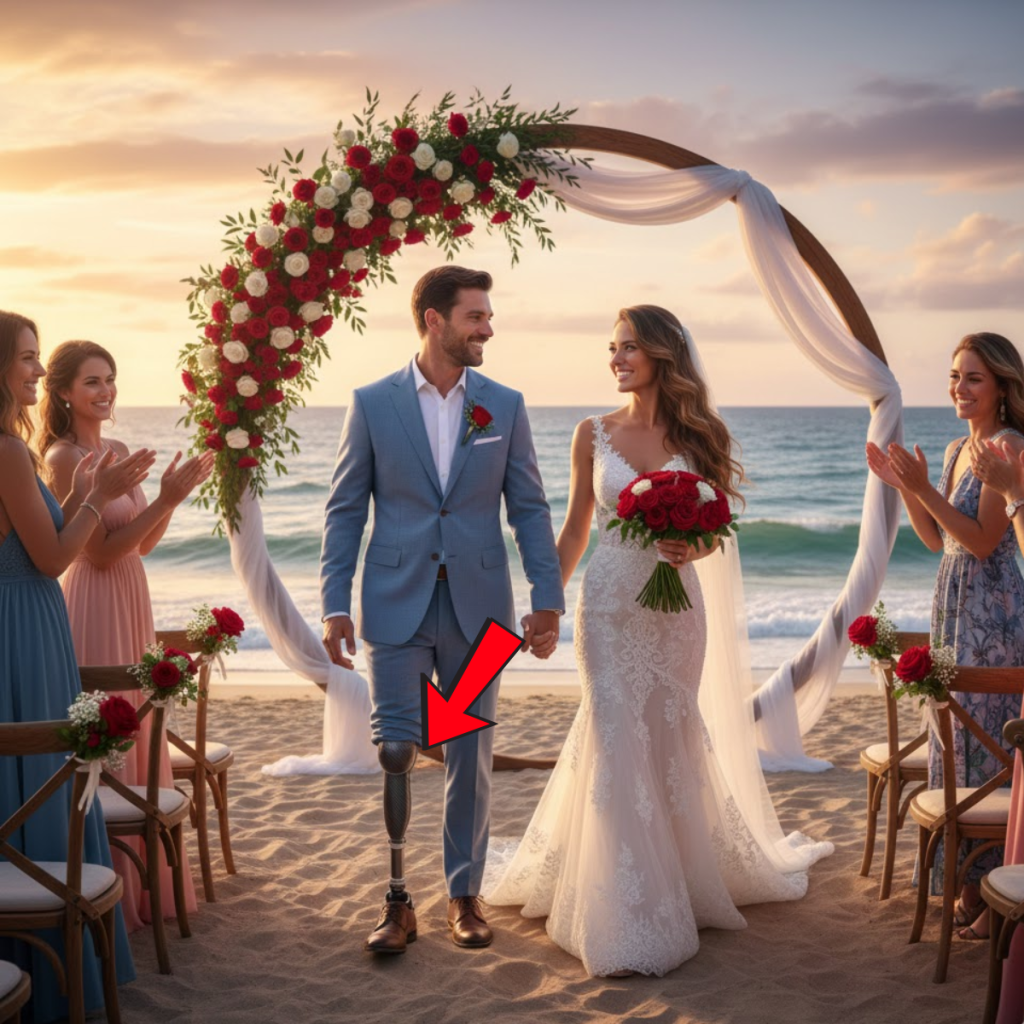
During my university years at UNAM, I fell in love with Laura Méndez, a sweet and kind woman who always put others before herself.
After graduating, I got a job at an international company, with a generous salary and a modern office.
Laura, on the other hand, despite my attempts to help her, only managed to find work as a receptionist at a small hotel.
One day I told myself:
—I deserve something better.
I left her with a coldness that would later fill me with deep self-disgust.
I replaced her with Mariana Salazar, the daughter of the company’s director: rich, elegant, and proud.
And Laura… she remained silent, crying in the shadows.
I believed my life was about to begin a perfect chapter.
But in reality, that was the beginning of everything that slowly started to collapse.
Five years later, I was Deputy Sales Director, had my own office, a BMW—yet I was not happy.
My marriage to Mariana felt like a contract I could never win.
She despised my humble origins.
Every time something displeased her, she would throw this line at me:
—Without my father’s help, you’d still be a mediocre salesman.
I lived like a shadow inside my own home.
Until one day, during a meeting, an old friend said to me:
—Hey, Alejandro, do you remember Laura? She’s getting married soon.
I sat up abruptly.
—To whom?
—To a construction worker. They don’t have much money, but they say she’s happy.
I let out a mocking laugh.
—Happy with a poor man? She really never knew how to choose.
I decided to go to that wedding—not to congratulate her, but to mock her choice.
I wanted Laura to see what a successful man I had become… the man she once loved.
That day, I drove to a town near Valle de Bravo, where Laura lived now.
The wedding was held in a simple courtyard, decorated with yellow lights, wooden tables and chairs, and wildflowers.
I stepped out of my luxury car, adjusted my vest, and walked in with an air of arrogance.
Some people turned to look at me. I felt like I had come from another world—more refined, more “successful.”
Then I saw the groom.
My heart stopped.
He was standing in front of the altar, wearing a simple suit.
A face I knew all too well.
Javier Morales.
Javier—my best friend from university.
Back then, Javier had lost a leg in a car accident. He was kind, supportive, always helped with group projects, cooked for everyone, and kept things organized. I considered him a “weak shadow,” someone insignificant.
After university, Javier worked as a crew supervisor at a small construction company. We lost contact. I was sure his life would never amount to much.
And now… he was Laura’s husband.
I stood frozen among the crowd.
Laura appeared—beautiful, serene, her eyes shining—and took Javier’s hand with confidence, happiness, and without a single doubt.
I heard some neighbors whispering:
—Javier is admirable. He works hard with just one leg and is a devoted son. He saved for years, bought this small piece of land, and built the house where they’re celebrating today with his own hands. He’s a brave man—everyone respects him.
My throat tightened.
Watching Javier help Laura up the steps, seeing the way they looked at each other—calmly, sincerely—left me breathless.
It was a kind of love I never knew how to give.
I had despised simplicity, feared others’ judgment, feared my friends’ mockery.
And there she was, proudly holding the hand of a man with one leg… because he had a whole heart.
Back in my apartment in Mexico City, I threw my jacket on the floor and collapsed into a chair.
For the first time in years, I cried.
Not out of jealousy, but out of defeat.
Not over lost money, but over lost character.
I had status, a car, a house—everything I once bragged about—and yet I had no one who truly loved me.
And Laura—the woman I once looked down on—now had a husband with one leg, but with a heart capable of loving and protecting her.
From that day on, I changed.
I stopped judging people by their money.
I stopped mocking those who live humbly.
I stopped flaunting cars, watches, and material things to hide my emptiness.
I learned to listen, to respect, and to love genuinely—not to win Laura back, but so I wouldn’t feel ashamed when I looked at myself in the mirror.
Now, whenever I see a couple walking hand in hand through the city streets, I think of Javier and Laura.
And I smile—a painful smile, but one at peace.
Because in the end, I understood something:
The true value of a man is not in the car he drives, but in how he treats the woman he loves when he has nothing.
Money can buy fame, but not respect.
True success is not reaching the top—it’s preserving dignity, no matter where you stand.



Leave a Reply